![[personal profile]](https://www.dreamwidth.org/img/silk/identity/user.png) portico
porticoIn my eternal quest to know about more queer architects, i heard Horace Gifford's name a few times, enough that i added him to the roster of people i hunt for books about in secondhand bookstores. i never seemed to find anything, so i finally looked online (my preference is to stumble across things serendipitously, but sometimes action is required) and discovered the problem: there is a single book about gifford, and despite only being 10 years old it is wildly out of print. like, copies priced at $500 out of print. so, i did the next best thing and requested a copy via ILL.
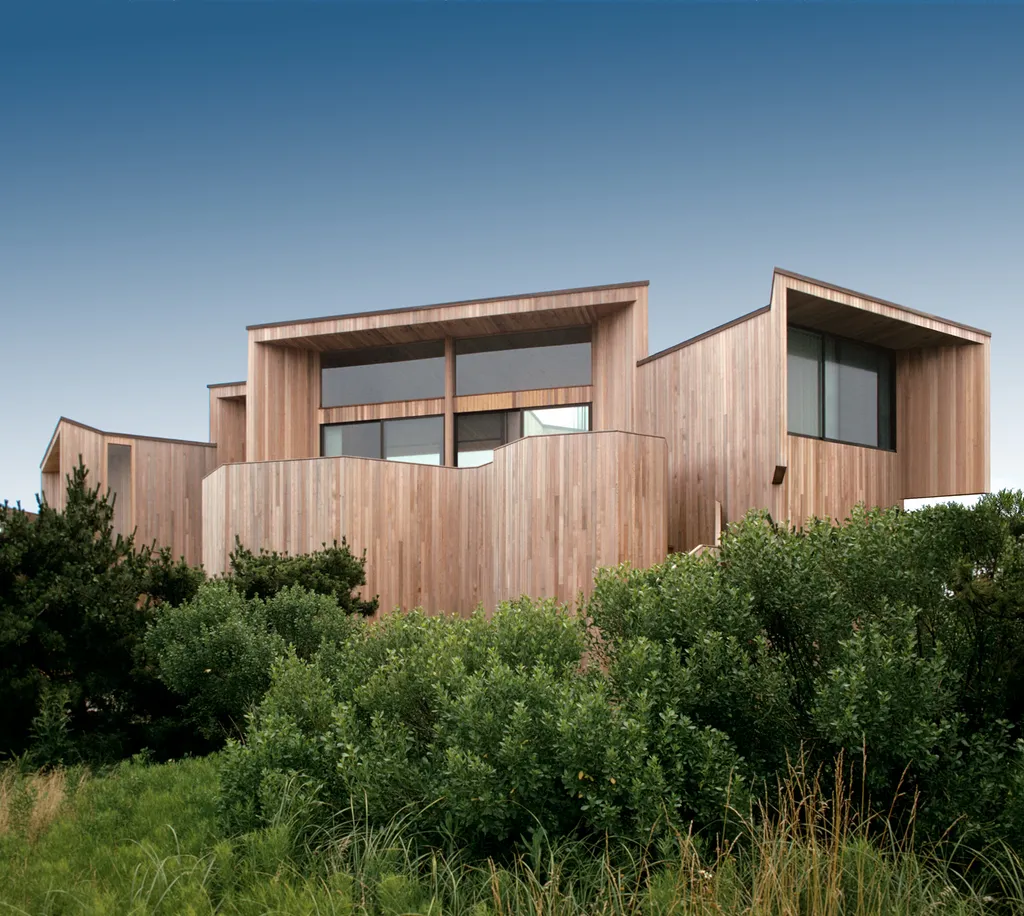
gifford was active on fire island (primarily in the Pines) for 20 years, throughout the 1960s and 70s. he established a vernacular architecture in a place which previously had been home to modest beach shacks. he was gay, and handsome, and died tragically of complications due to AIDS in 1992. much like in the case of perkins harnly, that we have any record of gifford at all aside from his houses is due to one person's willingness to hold onto his papers. sometimes i think about how many people who died during that era who will surely be forgotten by history and i'm overwhelmed. i'm so glad that horace gifford wasn't one of them.
fire island modernist is wonderful. it traces gifford's life as well as that of fire island, juxtaposing the evolution of gifford's style with fire island's transformation into the queer enclave it is today. this is crucial, not only because of gifford's sexuality, but because so many of his clients were gay. in a very real way, gifford's career only was what it was because it happened on fire island. the book's author, Christopher Bascom Rawlins, is gay and an architect himself, which lent an affectionate, knowing tone to the book which i enjoyed. that this is his first book astonished me--the prose is excellent.

gifford truly was representative of a time and place. he studied architecture under louis kahn, yet he practiced without a licensed after being caught in a raid of the Meat Rack (a stretch of beach between the Pines and Cherry Grove where men would cruise) in 1965. the houses he built had modern lines, but were constructed of and sided inside and out of cedar and pine. no chrome and concrete here. he was a master of sightlines and light, deliberately creating open spaces where folks could gather and be social, always visually and physically close to the outdoors, and socking bedrooms away in small spaces, dimly lit and comfortable. the books has snapshots of "the men of fire island" from throughout the years gifford was active interspersed with houses--a nice touch, i thought.
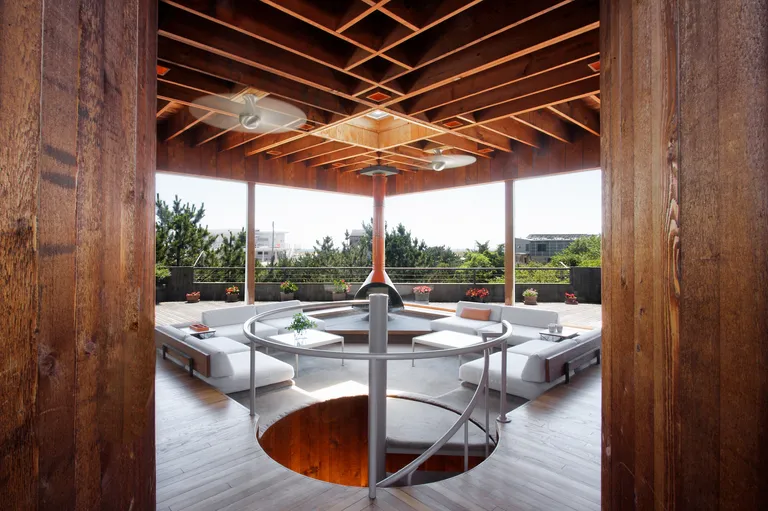
in the book's afterward, rawlins talks about researching and writing the book as "resurrecting an architect." gifford's name had been largely forgotten, even by the place where he'd made it. gifford might have populated the pines with his houses, but others had contributed their own gifford knock-offs and at a certain point they all blend together into a style. rawlins tracked down all of gifford's houses (several of which are still owned by the folks who had built them--check out the Rosenthal House above with its conversation pit still wearing the original carpet!) and had many re-photographed, as well as including historic photos. the book is a visual feast, if you're hungry for beach houses. and i am.
(my uncle was an architect, and built a beach house in north carolina long before i was born, but i grew up visiting it every summer. like gifford's beach houses, it was wood inside and out, warm pine paneling that glowed in the light reflected off the ocean, with small bedrooms that were dim and cozy. that forever has felt to me like the "right" way for a beach house to be. small, comfortable, not sprawling, close to nature. definitely not modern, although it did have a tower room that you reached via a spiral staircase, which was funky. in retrospect, a conversation pit would have been nice also.)
gifford was active on fire island (primarily in the Pines) for 20 years, throughout the 1960s and 70s. he established a vernacular architecture in a place which previously had been home to modest beach shacks. he was gay, and handsome, and died tragically of complications due to AIDS in 1992. much like in the case of perkins harnly, that we have any record of gifford at all aside from his houses is due to one person's willingness to hold onto his papers. sometimes i think about how many people who died during that era who will surely be forgotten by history and i'm overwhelmed. i'm so glad that horace gifford wasn't one of them.
fire island modernist is wonderful. it traces gifford's life as well as that of fire island, juxtaposing the evolution of gifford's style with fire island's transformation into the queer enclave it is today. this is crucial, not only because of gifford's sexuality, but because so many of his clients were gay. in a very real way, gifford's career only was what it was because it happened on fire island. the book's author, Christopher Bascom Rawlins, is gay and an architect himself, which lent an affectionate, knowing tone to the book which i enjoyed. that this is his first book astonished me--the prose is excellent.
gifford truly was representative of a time and place. he studied architecture under louis kahn, yet he practiced without a licensed after being caught in a raid of the Meat Rack (a stretch of beach between the Pines and Cherry Grove where men would cruise) in 1965. the houses he built had modern lines, but were constructed of and sided inside and out of cedar and pine. no chrome and concrete here. he was a master of sightlines and light, deliberately creating open spaces where folks could gather and be social, always visually and physically close to the outdoors, and socking bedrooms away in small spaces, dimly lit and comfortable. the books has snapshots of "the men of fire island" from throughout the years gifford was active interspersed with houses--a nice touch, i thought.
in the book's afterward, rawlins talks about researching and writing the book as "resurrecting an architect." gifford's name had been largely forgotten, even by the place where he'd made it. gifford might have populated the pines with his houses, but others had contributed their own gifford knock-offs and at a certain point they all blend together into a style. rawlins tracked down all of gifford's houses (several of which are still owned by the folks who had built them--check out the Rosenthal House above with its conversation pit still wearing the original carpet!) and had many re-photographed, as well as including historic photos. the book is a visual feast, if you're hungry for beach houses. and i am.
(my uncle was an architect, and built a beach house in north carolina long before i was born, but i grew up visiting it every summer. like gifford's beach houses, it was wood inside and out, warm pine paneling that glowed in the light reflected off the ocean, with small bedrooms that were dim and cozy. that forever has felt to me like the "right" way for a beach house to be. small, comfortable, not sprawling, close to nature. definitely not modern, although it did have a tower room that you reached via a spiral staircase, which was funky. in retrospect, a conversation pit would have been nice also.)
no subject
Date: 2024-05-29 11:15 am (UTC)